Your Ocean Has a Noise Problem — And Volunteers With Microphones Are Finally Mapping It
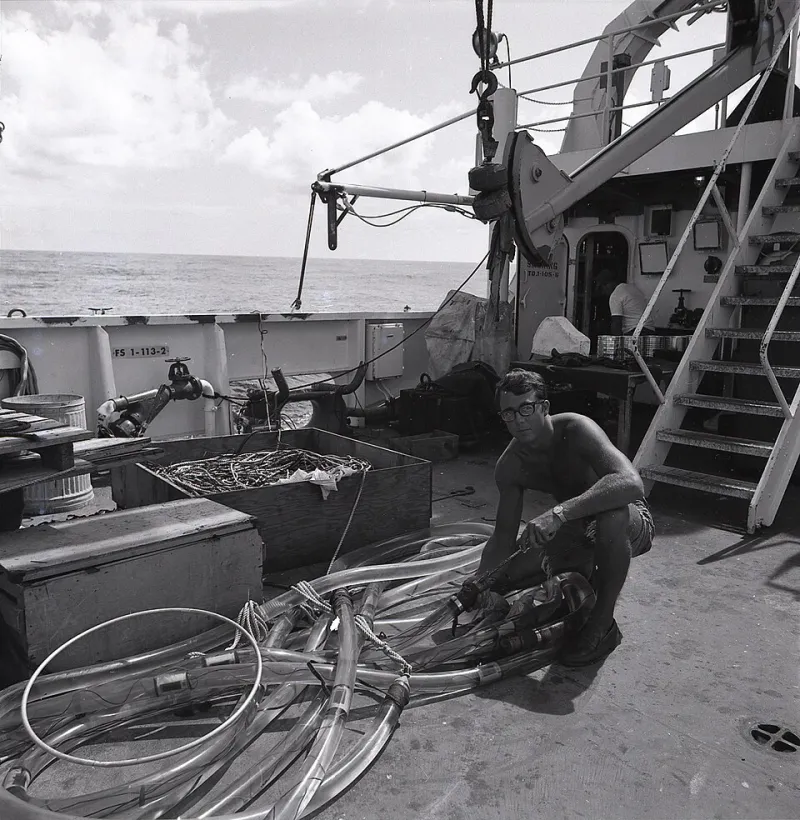
Photo: Credit Line: AIP Emilio Segrè Visual Archives, Gift of Bill Woodward, USNS Kane Collection, CC0, via Wikimedia Commons
Close your eyes and imagine the ocean. You're probably picturing something serene — waves, maybe the distant call of a gull. What you're almost certainly not imagining is the low, relentless thrum of a container ship's propeller cavitation, the percussive blast of seismic airguns mapping the seafloor for oil deposits, or the high-intensity pulse of military sonar bouncing off the continental shelf.
But that's what a lot of ocean sounds like now. And for animals that literally navigate, hunt, communicate, and find mates using sound, it's becoming a genuine emergency.
Sound Is How the Ocean Thinks
Light doesn't travel well underwater. Chemical signals disperse slowly. But sound? Sound moves through seawater roughly four times faster than it moves through air, and it travels vast distances with remarkable clarity. The ocean evolved around this physics.
Whales use low-frequency calls to communicate across hundreds — sometimes thousands — of miles of open water. Dolphins use echolocation so precise they can distinguish a golf ball from a ping-pong ball in total darkness. Fish larvae use the acoustic signatures of healthy reefs to navigate toward settlement sites. Even creatures as seemingly simple as sea turtles appear to use sound as an environmental cue.
The ocean's soundscape is not background noise. It's the medium through which marine life conducts much of its existence.
So when humans started filling that medium with industrial-scale sound — cargo shipping, naval exercises, offshore drilling, pile driving for wind turbines and bridge construction — the consequences weren't immediately obvious, but they were real. Animals started showing up disoriented, stranded, or dead in ways that didn't fit familiar patterns. Whale strandings correlated with sonar exercises. Fish populations in heavily trafficked shipping lanes showed signs of chronic stress. Dolphins in busy ports began using higher-pitched calls, essentially shouting to be heard over the din.
The Measurement Problem
Here's the frustrating part: for a long time, we didn't have nearly enough data to understand the full scope of the problem. Ocean acoustic monitoring has historically required expensive equipment, research vessels, and institutional funding. NOAA and a handful of universities maintained hydrophone arrays in certain locations, but coverage was patchy at best.
You can't build a policy case — or hold an industry accountable — without data. And the data had gaps you could sail a cargo ship through.
That's starting to change, in a way that feels genuinely exciting if you follow citizen science trends.
Volunteers With Hydrophones
Over the past several years, a loose but growing network of community science programs has started tackling ocean acoustics from the grassroots up. The model varies by organization, but the basic concept is consistent: train volunteers, deploy relatively affordable hydrophone equipment, collect data, and feed it into shared databases that researchers can actually use.
The Scripps Institution of Oceanography's long-running acoustic monitoring work has increasingly incorporated community-collected data. On the East Coast, groups working in the waters around New England have been building acoustic profiles of shipping lanes that overlap with critically important right whale habitat — using recordings gathered partly by recreational boaters and kayakers who've learned to deploy and retrieve simple recording equipment.
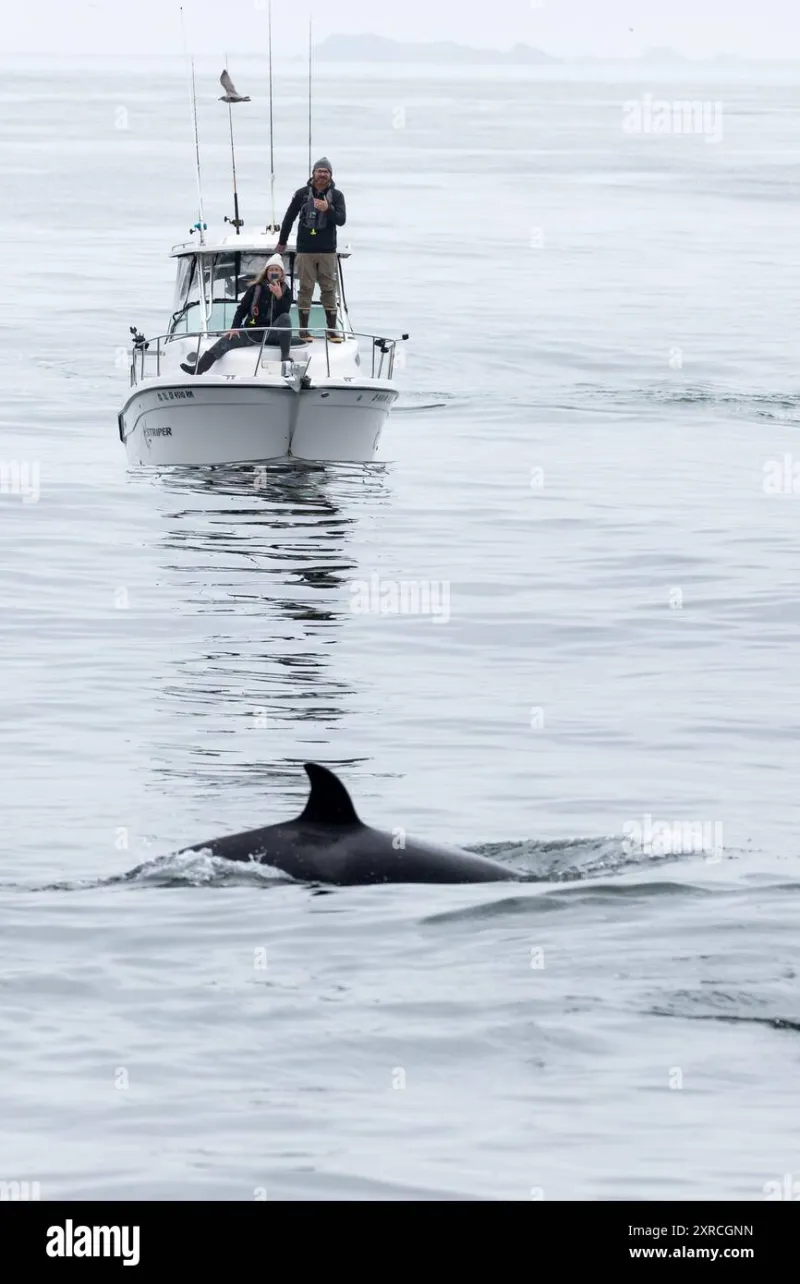
In the Pacific Northwest — waters that matter enormously to this publication's core concerns — acoustic monitoring volunteers have been documenting the soundscape in and around the critical habitat of Southern Resident orcas. These whales are already under pressure from depleted chinook salmon populations and pollution. Noise is the third stressor in what researchers call the "three Ps" threatening Southern Residents: prey, pollution, and disturbance. Every time a whale has to raise its voice to be heard over a passing vessel, that's energy not spent hunting. Every masked call is a potential breakdown in the social communication that keeps a matrilineal pod functioning.
The volunteer-gathered acoustic data from these waters has contributed to ongoing conversations about vessel speed restrictions and quiet zones in orca critical habitat — real policy conversations, shaped in part by data that didn't come from a research institution.
What a Sound Map Actually Shows
Picture a heat map of the US coastline, color-coded by ambient decibel levels at different depths and times of day. Red zones where shipping traffic is constant. Quieter blue stretches in protected marine areas or less-trafficked coastal sections. Seasonal variations where noise spikes during summer recreational boating season and drops in winter.
That's what acoustic monitoring networks are slowly building — a dynamic, real-time picture of ocean noise that has never existed before at this resolution. And the picture it's revealing is not pretty in a lot of places.
Shipping lanes along the California coast, the Gulf of Mexico, and the busy waters between the Pacific Northwest and Alaska are among the noisiest marine environments on the planet. The Northeast corridor — from Boston Harbor down through Long Island Sound — has been acoustically degraded to a degree that researchers describe as "chronic."
But the maps also reveal something useful: quiet corridors. Places where noise levels remain low enough that sensitive species might find acoustic refuge. Identifying and protecting those corridors is increasingly seen as a conservation priority, and you can't protect what you haven't measured.
The Tech Is Getting More Democratic
One of the most encouraging developments in this space is the falling cost of hydrophone technology. Professional-grade equipment used to run tens of thousands of dollars per unit. New generations of open-source and community-designed hydrophones — some developed by organizations explicitly focused on democratizing ocean science — have brought entry-level recording capability down to a few hundred dollars.
Organizations like OpenHydrophones and various university extension programs have developed training curricula for volunteers with no prior marine science background. The learning curve is real, but it's not prohibitive. If you can learn to use a field identification app for birds, you can learn to deploy a hydrophone and log your recordings into a shared database.
What's emerging is something that looks a lot like what happened with eBird for birding — a distributed network of non-expert observers generating data at a scale that professional researchers simply couldn't achieve on their own.
Turning Data Into Action
Data without advocacy is just noise of a different kind. The acoustic monitoring community has been deliberate about connecting its findings to policy channels — submitting comments to NOAA rulemaking processes, partnering with legal organizations that litigate on behalf of marine mammals, and building public-facing dashboards that let anyone see what the ocean sounds like near them.
The International Maritime Organization has begun discussing noise reduction standards for commercial vessels — a conversation that would have been nearly impossible to advance without the kind of widespread acoustic documentation that's now becoming available. Some major shipping companies have voluntarily adopted "slow steaming" practices in sensitive habitats, partly in response to pressure informed by acoustic research.
It's slow. The ocean is vast, the industrial interests are powerful, and regulatory change rarely moves at the speed the science demands. But the sound map is being drawn, one hydrophone deployment at a time, by people who decided that listening was a form of action.
The ocean has been trying to tell us something for decades. We're finally starting to hear it.