What the Whales Already Knew: How Indigenous Ocean Stewards Are Rewriting Marine Science
Photo: prilfish, CC BY 2.5, via Wikimedia Commons
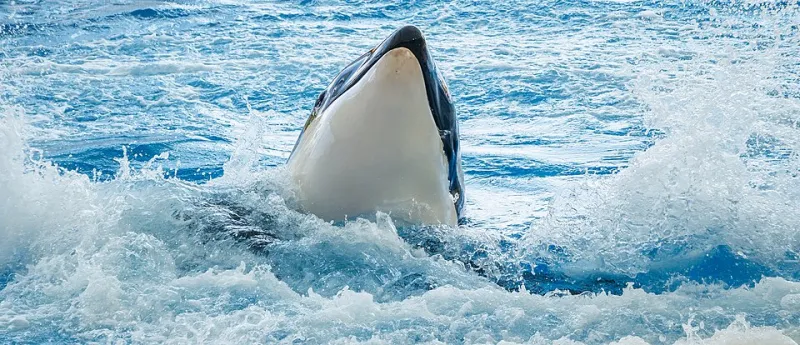
There's a moment that marine biologist Dr. Michael Smelcer describes that stopped him cold. He was aboard a research vessel off the coast of Washington State, reviewing hydrophone data with a team of Lummi Nation fishers, when an elder pointed at a spectrogram on the laptop screen and named the specific Southern Resident killer whale making the call — before the software did. The elder had been listening to these animals her entire life. She knew their voices the way you know the sound of a close friend's laugh.
"We've spent decades building acoustic databases," Smelcer later said. "She had one in her head."
That kind of moment is happening more and more along the Pacific Coast — and it's quietly transforming the future of marine conservation.
A Knowledge System That Predates the Lab
The Lummi Nation, whose ancestral waters stretch across the Salish Sea, have called the Southern Resident orcas qwe 'lhol mechen — "our relations beneath the waves" — for as long as their oral histories reach. That's not poetic license. It reflects a living, generational body of ecological observation that tracks whale population dynamics, behavioral patterns, and the health of the food web connecting orcas to Chinook salmon to the broader ocean ecosystem.
This isn't unique to the Lummi. The Makah Tribe of Washington's Olympic Peninsula, the Tsleil-Waututh Nation in British Columbia, the Haida Gwaii communities, and dozens of other coastal Indigenous groups hold deep reservoirs of what researchers now formally call Traditional Ecological Knowledge, or TEK. And for most of Western science's history, that knowledge was systematically ignored, dismissed, or outright stolen without credit.
That's finally starting to change — though not fast enough, and not without friction.
When Traditional Wisdom Beats the Data
In 2018, researchers studying the Southern Resident killer whale population — now critically endangered, with fewer than 75 individuals remaining — were puzzled by a behavioral anomaly. The whales were spending unusual amounts of time in areas that acoustic monitoring suggested were low in salmon. Lummi fishers, however, weren't surprised at all. They'd observed for years that the orcas tracked not just salmon abundance but salmon quality, seeking out specific Chinook runs based on fat content and size — exactly the kind of prey body-condition data their calves needed.
Subsequent research confirmed what the Lummi had described. The orcas weren't lost or confused. They were making sophisticated foraging decisions that our instruments had missed entirely. That insight has since shaped revised recovery strategies for the Southern Residents, including targeted advocacy for restoring specific Chinook salmon runs in the Snake and Columbia River systems.
"Western science often works in snapshots," says Zena Swiftwind, a conservation coordinator with a Pacific Northwest tribal environmental program who asked that her specific affiliation not be named. "Indigenous knowledge works in timelines. Generations of observation give you context that a five-year study simply cannot."
Leading the Charge, Not Just Consulting
One of the most significant shifts in recent years isn't just that scientists are listening to Indigenous communities — it's that Indigenous communities are increasingly leading the science themselves.
The Lummi Nation's Whatcom County-based marine program has trained tribal members as certified marine researchers, operating their own vessel, collecting their own acoustic and photographic identification data, and publishing findings in peer-reviewed journals. Their documentation of the relationship between low Chinook availability and orca reproductive failure helped build the scientific case for breaching the four Lower Snake River dams — one of the most consequential environmental policy debates in the Pacific Northwest today.
Further north, the Haida Nation's Gwaii Haanas National Marine Conservation Area Reserve operates under a co-management model with Parks Canada, with Haida Guardians conducting ecological monitoring and enforcement on their ancestral waters. The program has become an internationally recognized model for what genuine Indigenous-led stewardship looks like in practice — not advisory roles, but actual authority.
In Alaska, the Alutiiq and Sugpiaq communities around Kodiak Island have partnered with NOAA to integrate TEK into marine mammal population assessments, particularly for sea otters and Steller sea lions — animals whose population swings elders had tracked long before federal monitoring programs existed.
The Reconciliation Science Still Hasn't Finished
None of this comes without complicated history. Many Indigenous communities are rightfully cautious about sharing ecological knowledge with outside institutions, given decades of data being extracted and published without consent, compensation, or credit. The field of ethnobiology has a long and ugly track record of treating Indigenous knowledge as raw material for academic careers.
The emerging model — one that more conservation organizations are adopting — centers on data sovereignty. Indigenous communities own their knowledge. Collaboration happens on their terms, under agreements that specify how information is used, who gets credit, and who benefits from any resulting policy wins. It's a slower process than just sending a research team in. It's also a more honest one.
"Science doesn't get to parachute in anymore," says Dr. Adrienne Keane, a Native American legal scholar who has written extensively on Indigenous data rights. "If you want to understand these ecosystems, you need to build actual relationships with the people who've been tending them."
What the Orcas Are Telling Us
Back on the Salish Sea, the Southern Residents are still struggling. Their numbers haven't recovered. The salmon aren't there in the quantities these whales need. The noise from shipping traffic disrupts their echolocation. The toxins from decades of industrial pollution concentrate in their blubber and compromise their immune systems.
But the conservation movement fighting for them looks different than it did twenty years ago. Lummi fishers, tribal environmental departments, and Indigenous-led advocacy organizations like the Power Past Coal coalition are at the table — and often at the front of it. Their voices are shaping dam removal proposals, vessel speed regulations, and salmon habitat restoration funding in ways that purely academic lobbying never managed.
The whales, the Lummi say, are family. And you fight differently for family.
Western marine science is a powerful tool. But it took too long to realize it had been working with an incomplete picture — and that the missing pieces had been held, carefully, by the people who never left the water's edge.