The Nets That Never Stop Killing: Meet the Divers Racing to Pull Ghost Gear from the Deep
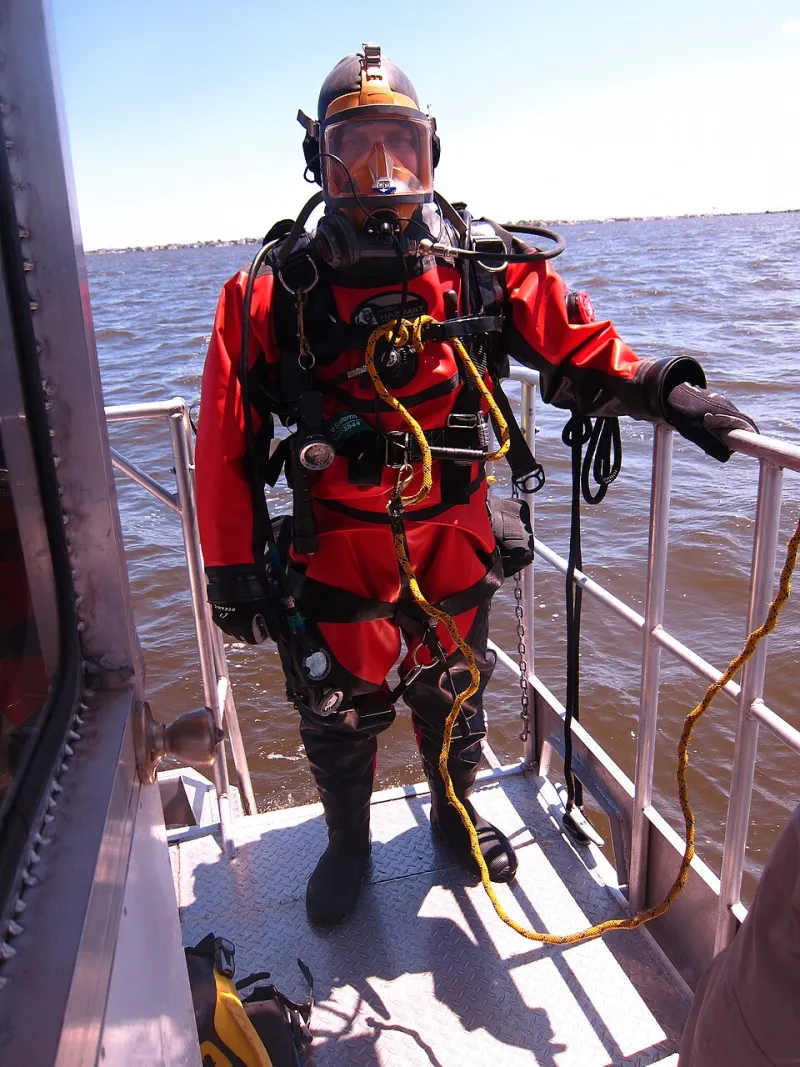
Photo: USEPA Environmental-Protection-Agency, Public domain, via Wikimedia Commons
Something Is Hunting in the Dark
It doesn't move. It doesn't need to. Drifting through the water column or draped across a reef 80 feet below the surface, an abandoned gillnet is patient in the way that only inanimate objects can be. A Dungeness crab wanders in. A rockfish follows. A harbor seal, chasing the fish, gets its flipper tangled in a mesh that was designed to be nearly invisible. None of them come back out.
This is ghost gear — the fishing nets, crab pots, longlines, and trawl equipment lost, abandoned, or discarded at sea — and it is one of the ocean's quietest catastrophes. Globally, an estimated 640,000 metric tons of fishing gear enters the ocean every year. Much of it keeps fishing indefinitely, in a process marine scientists grimly call "ghost fishing." No boat. No captain. No quota. Just an endless, automated kill.
Along the US coasts, the problem is severe. The Pacific Northwest, the Gulf of Mexico, the waters off New England — all of them harbor massive accumulations of derelict gear, some of it decades old, entangled in reefs and kelp forests and rocky outcroppings where it's nearly impossible to find without specialized equipment and serious diving skills.
Who Actually Goes After This Stuff?
The short answer: not nearly enough people, with not nearly enough funding.
But the longer answer is more hopeful. Across the country, a loose network of nonprofit dive teams, commercial fishermen turned conservationists, and tech-forward startups have made ghost gear removal their full-time mission. They operate with the energy of search-and-rescue units and the tenacity of people who have watched too many animals die from something entirely preventable.
The Northwest Straits Foundation, based in Washington State, is one of the longest-running and most successful operations in the country. Since the early 2000s, their teams of trained volunteer divers have removed more than 6,000 derelict nets from Puget Sound alone — gear that, by their own estimates, had been killing roughly 30,000 fish, 1,000 invertebrates, and dozens of marine mammals every year before it was pulled.
"When you're underwater and you find a net that's been down there for fifteen years, it's not abstract anymore," says Jenna Cortez, a dive team coordinator who has been volunteering with the Foundation for six years. "There are skeletons in it. Crab shells. Sometimes you find a seal that didn't make it. You come up from a dive like that and you don't need anyone to explain to you why this matters."
Further down the coast, the California-based organization Clean Seas has been running targeted removal missions in the Channel Islands and along the Monterey Bay coastline, focusing particularly on areas where loggerhead sea turtles and Pacific harbor seals have the highest rates of entanglement. Their operations combine traditional scuba diving with remotely operated vehicles (ROVs) for deeper sites where human divers can't safely work.
The Tech Trying to Find What Eyes Can't See
Finding ghost gear is often harder than removing it. A derelict net in 120 feet of murky water, draped over a rocky bottom and covered in several years of algal growth, is essentially invisible to conventional survey methods. You could dive right over it and never know it was there.
That's where a new generation of detection technology is starting to change the game.
Researchers at the Monterey Bay Aquarium Research Institute have been developing sonar-based detection systems capable of distinguishing the acoustic signature of synthetic fishing mesh from natural seafloor features. Early results are promising — in field trials, the system correctly identified derelict net locations with significantly higher accuracy than traditional side-scan sonar.
Separately, a startup out of Seattle called DeepTrace is training machine learning models on underwater image datasets to automatically flag potential ghost gear in footage collected by ROVs and autonomous underwater vehicles. The idea is to dramatically reduce the time marine survey teams spend manually reviewing hours of video, getting removal crews to the right spots faster.
"Right now, the bottleneck isn't the divers — it's finding the gear," says DeepTrace co-founder Amir Osei. "If we can cut detection time by even 50 percent, we can double the amount of gear that gets removed with the same resources."
The Policy Gap Nobody Wants to Talk About
For all the heroism of dive teams and the promise of new technology, the ghost gear crisis is fundamentally a policy failure. The gear didn't get there by accident — it got there because the fishing industry, for most of its modern history, has operated without meaningful accountability for lost equipment.
In the US, there is no federal requirement for fishing vessels to report lost gear, no standardized marking system that would allow lost gear to be traced back to its owner, and no industry-wide fund to cover the cost of removal. The burden falls almost entirely on nonprofits, volunteers, and the occasional state agency with a small budget line for derelict gear programs.
The NOAA Marine Debris Program does provide some grant funding for removal efforts, and the 2020 Save Our Seas 2.0 Act included modest provisions for ghost gear specifically. But advocates argue the resources are still a fraction of what's needed to address the scale of the problem.
"We're essentially cleaning up a mess that the industry created, with donations and volunteer hours," says Dr. Sarah Nkemdirim, a marine policy researcher at the University of Washington. "At some point, we have to have a conversation about who actually bears responsibility for this — and what it would look like to build prevention into the system from the start."
Some countries are further along on this. Australia and several European nations have implemented gear marking requirements and vessel monitoring systems that make it possible to trace lost gear to its source. There's no technical reason the US couldn't do the same.
The Work That Doesn't End
Back in Puget Sound, Jenna Cortez is prepping for another dive. The water is 48 degrees and visibility is maybe 15 feet on a good day. She's going down with three other volunteers to investigate a sonar anomaly flagged last week — possibly a derelict crab pot, possibly a section of gillnet, possibly nothing.
She hopes it's nothing. She doesn't think it will be.
"Every time we pull something up, I feel good for about five minutes," she says, pulling on her dry suit. "And then I think about how much is still down there. But you can't let that stop you. You just go back in."
The nets that nobody owns are still out there, still fishing. The people going after them are outgunned, underfunded, and doing it anyway. That's the story of the ocean right now — and it's worth paying attention to.