Seaweed Is the New Solar: How Kelp Farmers Are Turning the Ocean Into a Climate Weapon
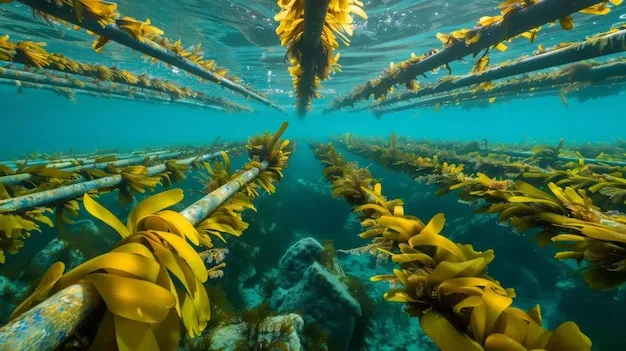
Photo: kelp seaweed farm underwater ocean aquaculture coastal, via img.freepik.com
The Ocean Has Been Waiting for This Moment
Drive along the coast of Damariscotta, Maine, in late spring and you might notice something unusual bobbing just offshore — rows of buoys strung like beads across the cove, anchoring lines that drop into the cold Atlantic below. It doesn't look like much from the surface. But pull on a mask and peer down, and you'll find something extraordinary: dense, amber-gold curtains of kelp swaying in the current, some fronds stretching six, eight, even ten feet long after just a few months of growth.
This is what a climate solution looks like when it's still wet.
Kelp farming — the intentional cultivation of large brown macroalgae in open coastal waters — has exploded from a niche curiosity into a genuine industry over the last five years. Entrepreneurs, marine biologists, Indigenous fishing communities, and environmental nonprofits are all scrambling to stake their claim in what some are calling the blue-green economy. And the core pitch is straightforward: kelp grows insanely fast, it pulls carbon dioxide out of the water as it photosynthesizes, and it asks for almost nothing in return.
Why Kelp? Why Now?
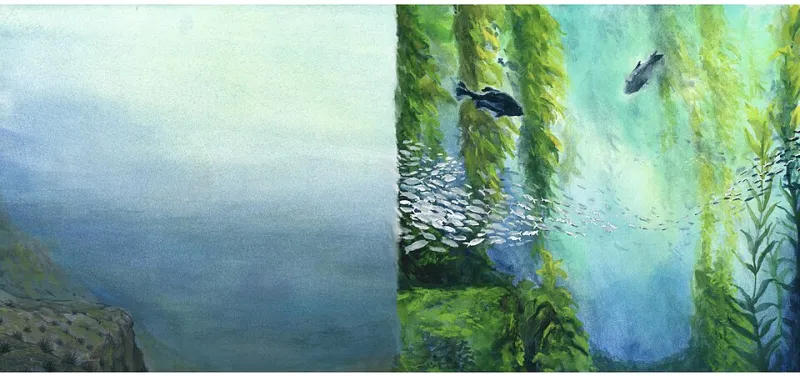
To understand the excitement, you have to understand what kelp actually does in an ecosystem. Wild kelp forests — the kind that once blanketed huge stretches of the California coast and still thrive in parts of Alaska and the Pacific Northwest — are among the most productive habitats on the planet. They provide shelter and food for hundreds of species, from juvenile rockfish to sea otters to the gray whales that migrate through them annually.
But kelp is also a carbon machine. Through photosynthesis, it absorbs CO2 at rates that rival terrestrial forests — some studies suggest that globally, macroalgae may sequester as much as 200 million tons of carbon per year. When cultivated kelp is harvested and used in products like biofuel, fertilizer, or food, that carbon gets locked away rather than released back into the atmosphere. And if portions of the biomass sink to the ocean floor, the carbon can stay sequestered for centuries.
"The math is genuinely exciting," says Dr. Erin Lally, a marine biogeochemist at Woods Hole Oceanographic Institution. "We're not saying kelp farming alone solves climate change. But as part of a portfolio of solutions, it's one of the few that simultaneously sequesters carbon, restores biodiversity, and creates local jobs. That combination is rare."
Farms at the Frontier
Across the country, a handful of pioneering operations are already proving the concept works at commercial scale.
In Washington State, a small startup called Blue Tide Cultivars has been operating a 40-acre farm in the Puget Sound since 2021. They grow sugar kelp and bull kelp on suspended longlines, harvesting twice a year. Their biomass goes into everything from pet food supplements to agricultural fertilizer to a surprisingly good seaweed hot sauce that's developed a cult following at Pacific Northwest farmers markets.
Down in Southern California, where wild kelp forests have declined by more than 90 percent in some areas due to warming waters and sea urchin overpopulation, restoration-focused farms are taking a different approach. Rather than maximizing harvest, some operations are essentially using aquaculture as an ecological intervention — growing kelp to reintroduce it into depleted zones, hoping the farms can seed natural recovery.
Maine, meanwhile, has quietly become the kelp farming capital of the East Coast. The state now hosts more permitted seaweed farms than any other in the country, driven partly by the collapse of traditional fisheries and partly by a forward-thinking regulatory environment that made permitting relatively accessible for small operators.
The Regulatory Maze
That last point — regulation — is where the gold rush metaphor starts to feel uncomfortably accurate. Because just like the original Gold Rush, the race to farm the ocean is running up against a complicated patchwork of rules, competing interests, and questions that nobody has fully answered yet.
Federal oversight of offshore aquaculture sits in a weird jurisdictional gray zone between NOAA, the Army Corps of Engineers, the EPA, and individual state agencies. Permitting a new farm can take years and cost tens of thousands of dollars in legal fees before a single seed is planted. For small operators — particularly Indigenous fishing communities or low-income coastal towns that could benefit most from the economic opportunity — that barrier is often insurmountable.
"We spent two and a half years just getting our permit," says Marcus Whitehorse, who operates a small kelp farm with his family on the Olympic Peninsula in Washington. "By the time we got approved, two of the other families who wanted to join us had already given up. The system isn't built for people like us."
Environmental groups are also raising legitimate questions about scale. Kelp farming at the acreage needed to make a meaningful dent in carbon emissions would require an enormous expansion of ocean real estate — potentially affecting wild fisheries, shipping lanes, recreational areas, and viewsheds that coastal communities care deeply about. Getting that balance right will require honest, inclusive conversations that haven't fully happened yet.
A Community Bet Worth Making
Despite the hurdles, the momentum feels real. Investment in seaweed aquaculture in the US has grown significantly year over year, with both venture capital and federal climate funding flowing into the space. NOAA launched a dedicated seaweed aquaculture research initiative in 2022. Several coastal states are actively revising their permitting frameworks to make entry easier.
And perhaps most promisingly, the people who know these coastlines best — fishing families, tribal nations, and small harbor communities — are increasingly at the table. In Alaska, the Seldovia Village Tribe has partnered with university researchers to develop a kelp farming model that integrates traditional ecological knowledge with modern aquaculture science. In Maine, a cooperative of small-scale farmers is pooling resources to share processing infrastructure, making the economics work for operations that would otherwise be too small to survive.
The ocean has been absorbing the consequences of our carbon economy for decades — warming, acidifying, losing the wild abundance that once defined it. Kelp farming won't undo all of that. But watching those amber fronds sway in a Maine cove, you get a rare feeling: that the ocean might actually have room to give something back, if we're willing to tend it right.
The seaweed is growing. The question now is whether we can build a system worthy of it.