Racing the Melt: Dispatches from Scientists Scrambling to Record the Arctic Before It's Gone
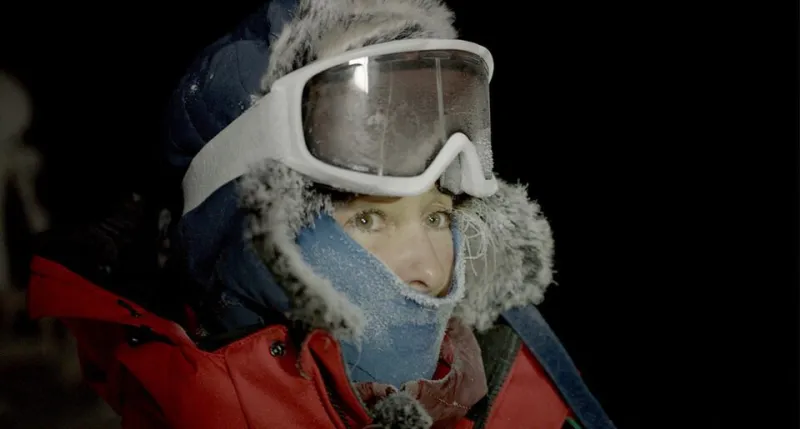
Photo: National Snow and Ice Data Center, CC BY 2.0, via Wikimedia Commons
The first thing Mara Okonkwo noticed wasn't the missing ice. It was the silence.
A field ecologist from the University of Alaska Fairbanks, Okonkwo had spent four previous summers on Baffin Island, cataloging seabird nesting behavior along the island's northeastern coast. She knew the soundscape the way a musician knows a familiar score — the overlapping calls of thick-billed murres, the dry crack of shifting sea ice, the particular way wind moved across the tundra in late June. When she returned this past summer, the ice that had framed her study site was largely gone. And with it, the birds that depended on the ice edge for feeding had shifted north, some by more than forty miles.
"I stood at a site I've visited a dozen times," she told us over a satellite call from Iqaluit, "and I genuinely didn't recognize it. Not emotionally. Scientifically. The baseline had moved."
That shifting baseline is the defining crisis of Arctic field research right now — and it's driving a remarkable, sometimes desperate scramble to document ecosystems that are transforming faster than the science can keep pace with.
The Clock Is Measurable Now
For years, climate scientists warned that the Arctic was warming at roughly twice the global average rate. That figure has since been revised. Depending on the dataset, the Arctic is now warming three to four times faster than the rest of the planet. The sea ice minimum recorded in September 2023 shattered previous records by a margin that left researchers visibly shaken at international conferences. Some models that once projected an ice-free Arctic summer by 2050 are quietly being revised to the late 2030s — or earlier.
For expedition scientists, this isn't an abstraction. It's a countdown.
Dr. James Renner, a glaciologist with the National Snow and Ice Data Center in Boulder, Colorado, has spent fifteen field seasons monitoring outlet glaciers on Greenland's western coast. He describes the pace of change in terms that are almost surreal. "We have time-lapse photography of glacier fronts from the 1990s. Then from 2005. Then 2015. Then last year. Each sequence looks like a different planet. We're not talking about gradual change. We're talking about transformation within a human career span."
Renner's current project — a partnership between NSIDC, several Greenlandic Inuit communities, and a network of volunteer citizen scientists — is building a comprehensive photographic and acoustic archive of glacier behavior before those glaciers reach points of irreversible retreat. The archive isn't just for research. It's designed to be legally and scientifically usable as evidence in future climate litigation and policy proceedings.
Expedition Journalism Meets Hard Science
Outside the formal research world, a parallel movement of expedition documentarians is filling in the gaps that understaffed scientific programs can't cover alone.
Sarah Blumenthal, a Brooklyn-based photographer and sea kayaker, has completed three solo-supported expeditions along the Northwest Passage over the past seven years. What started as an adventure project has evolved into something closer to an archival mission. She now travels with calibrated underwater cameras, temperature sensors, and a protocol developed with oceanographers at Woods Hole Oceanographic Institution for recording water column data at standardized intervals.
"I'm not a scientist," she says plainly. "But I can follow a protocol. And I can get to places that research vessels can't, on a budget that grants don't cover." Her imagery and data have been incorporated into three peer-reviewed studies. Her photographs have appeared in congressional testimony supporting Arctic refuge protections.
She's not alone. Programs like Earthwatch Institute and the National Geographic Society's Pristine Seas project have formalized the integration of trained citizen scientists into Arctic field work, creating systems where expedition participants contribute usable data while funding research through participation fees. It's an imperfect model — critics note that it skews participation toward wealthy adventurers — but the data it generates is real and increasingly indispensable.
What's Being Lost Between the Reports
The scientific literature captures broad trends. What it often misses is the texture of specific, irreplaceable places.
The Mackenzie River Delta in Canada's Northwest Territories — a sprawling mosaic of channels, lakes, and wetlands that drains into the Beaufort Sea — hosts one of the most biodiverse freshwater-to-marine transition zones in the Northern Hemisphere. Beluga whales use its warm, shallow waters as calving habitat every summer. Migratory shorebirds stop here by the millions. Indigenous Gwich'in and Inuvialuit communities have fished and hunted these waters for thousands of years.
Permafrost thaw is now destabilizing the delta's banks at rates that local Inuvialuit hunters describe as shocking. Whole sections of riverbank that were solid ground in their parents' time are sloughing into the current. The turbidity of the water is changing. Beluga calving patterns have shifted. And the scientific monitoring infrastructure to document all of this in real time is, frankly, inadequate.
"There are maybe a handful of researchers working in this specific area at any given time," says Dr. Lena Chiu, a freshwater ecologist who has studied the Mackenzie system. "The delta is the size of a small US state. We're doing triage, not comprehensive monitoring."
The Archive as Act of Resistance
There's something profound — and genuinely defiant — about the impulse to document what's vanishing. It refuses the erasure. It says: this existed, it mattered, and we were here to witness it.
For researchers like Okonkwo, who returned to Baffin Island to find her study site transformed, that archival impulse has become inseparable from the science itself. She's now building a long-term dataset designed not just to track what's disappearing, but to identify what's adapting — which species are shifting ranges, which are proving more resilient than expected, which ecosystem relationships are rewiring themselves in real time.
"The grief is real," she says. "But so is the science. And the science is what keeps me going back."
The Arctic won't stop changing because we document it. But the records being created right now — by researchers, by Indigenous knowledge holders, by kayakers with calibrated cameras — may be the most important conservation infrastructure of the next century. Future generations will need to know what was here. They'll need to understand what was lost, and why. And they'll need the evidence to hold the responsible parties accountable.
The ice doesn't wait. Neither do the people racing to record it.