Break the Dam: America's River Rewilding Revolution Is Reshaping the Wild and Opening New Frontiers
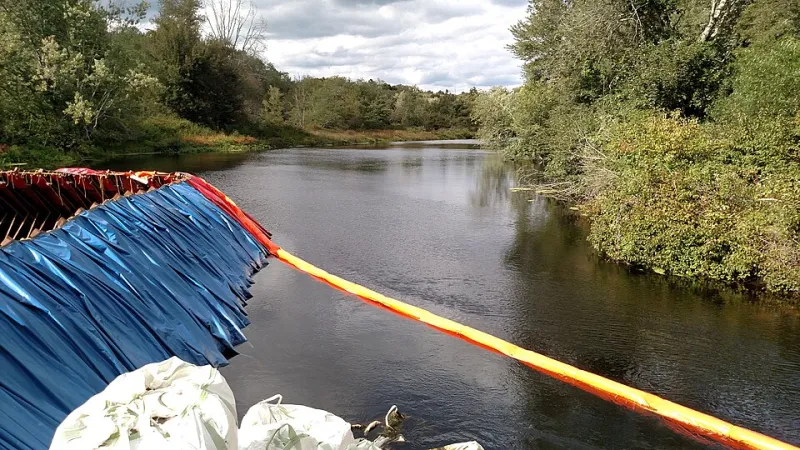
Photo: U.S. Fish and Wildlife Service Northeast Region, Public domain, via Wikimedia Commons
There's a particular kind of quiet that settles over a river valley after a dam comes down. At first, it's almost unsettling — the water runs murky, the riverbed is exposed and raw, the landscape looks like something between a construction zone and a wound. But give it a season. Give it two. What comes back is something that will genuinely stop you in your tracks.
Across the United States, a sweeping and often contentious movement is underway to tear out dams, restore floodplains, and hand rivers back to themselves. It's the largest river restoration effort in human history, and it's happening right now — in your backyard, or close enough to it.
The Numbers Behind the Movement
Since the 1990s, more than 1,900 dams have been removed across the US, with the pace accelerating dramatically in recent years. The Elwha River restoration in Washington State — completed in 2014 after the removal of two dams — remains the most famous example, but it's far from the only one making waves.
In 2023, the Klamath River dam removal project began in earnest along the Oregon-California border, ultimately involving the demolition of four dams in what became the largest dam removal project in American history. The Klamath once supported one of the most productive salmon runs on the West Coast. Coho, Chinook, and steelhead had been largely cut off from hundreds of miles of spawning habitat for over a century. Within months of the first dam coming out, fish were already pushing upstream into reaches they hadn't accessed since before World War One.
On the East Coast, projects on the Penobscot River in Maine have restored Atlantic salmon and American shad runs. In Pennsylvania, work on the Brandywine Creek has opened up migratory corridors that had been blocked since the colonial era. Even the heavily urbanized Los Angeles River is the subject of an ambitious, ongoing restoration effort that aims to soften its infamous concrete channel and reintroduce native vegetation and wildlife habitat.
Why Dams Come Down
Most people assume dams last forever. They don't. The average lifespan of a US dam is around 50 years, and the American Society of Civil Engineers has estimated that thousands of the country's roughly 90,000 dams are structurally deficient or have simply outlived their usefulness. Many were built for flood control, irrigation, or hydropower purposes that are now better served by other means — or that were never as effective as promised.
The economics of dam removal have shifted dramatically. In many cases, taking a dam out is cheaper than repairing it. Federal licensing requirements for hydropower dams have also created windows of opportunity: when licenses come up for renewal, environmental reviews increasingly weigh the ecological costs of keeping a dam in place.
Tribal nations have been among the most powerful voices in this conversation. The Yurok, Karuk, and Shasta tribes were central advocates for the Klamath removals, connecting the return of salmon not just to ecological restoration but to cultural survival. That dimension — the idea that river rewilding is also an act of historical reckoning — adds a layer of meaning to these projects that purely technical arguments can't capture.
The Adventure Angle Nobody Talks About Enough
Here's where it gets interesting for anyone who likes to get outside.
Dam removal doesn't just restore ecosystems — it creates new recreational landscapes. The Elwha River valley, now free-flowing for the first time in over a century, has become a destination for kayakers, fly fishers, and wildlife watchers drawn by the recovering salmon runs and the returning bald eagles that follow them. Olympic National Park, which surrounds much of the Elwha watershed, has seen visitor interest in the river corridor surge since the removals were completed.
On the Klamath, outfitters are already beginning to map new whitewater routes through sections of river that were previously submerged under reservoir water. The reemergence of natural river morphology — riffles, pools, braided channels — creates paddling terrain that simply didn't exist before. Think of it as nature building new put-ins.
Fly fishing is perhaps the most direct beneficiary. Restored salmon and steelhead runs mean restored fisheries, and in rivers like the Elwha and the Penobscot, anglers are reporting catches in stretches that were barren within living memory. The Penobscot River Restoration Trust has documented steady increases in migratory fish populations since the removal of the Great Works and Veazie dams in 2012 and 2013.
Wildlife observation opportunities expand too. Returning fish bring returning predators — osprey, herons, river otters, black bears, and in some Pacific Northwest drainages, wolves. A restored river is essentially a restored food web, and every link in that chain is a potential sighting for anyone patient enough to sit on a riverbank with binoculars.
The Controversy Is Real
It would be dishonest to tell this story without acknowledging the fights.
Farmers and ranchers who depend on reservoir water for irrigation have legitimate concerns about what dam removal means for their operations. Hydropower advocates argue that losing even small amounts of renewable energy generation is a poor trade in the context of climate change. Some communities have deep cultural and economic ties to the reservoirs themselves — the lakes formed by dams have become recreation destinations in their own right, with lakeside cabins and boat ramps that disappear when the water drains.
These tensions are real, and the best river restoration projects take them seriously. The Klamath negotiations involved years of stakeholder engagement precisely because the interests involved were so diverse and so deeply felt. There's no version of this work that pleases everyone, but the projects that have succeeded tend to be the ones that treated affected communities as partners rather than obstacles.
What's Coming Next
The Biden administration made dam removal a priority, and while the political landscape has shifted, the underlying economics and engineering realities haven't. Thousands of dams across the country are approaching the end of their operational lives, and the cost of maintaining them will continue to force hard decisions.
For adventure seekers and conservation enthusiasts, the opportunity here is to pay attention. Follow the dam removal conversations happening in your region. Show up for public comment periods. Support organizations like American Rivers, which tracks removal projects nationwide and advocates for free-flowing waterways. And when a river near you gets its dams taken out, go see what comes back.
Because what comes back, if you give it enough time, is something that will remind you exactly why wild places matter — churning, cold, alive, and moving like it never stopped.