Ocean Gone Quiet: The Disappearing Soundscape Threatening Marine Life as We Know It
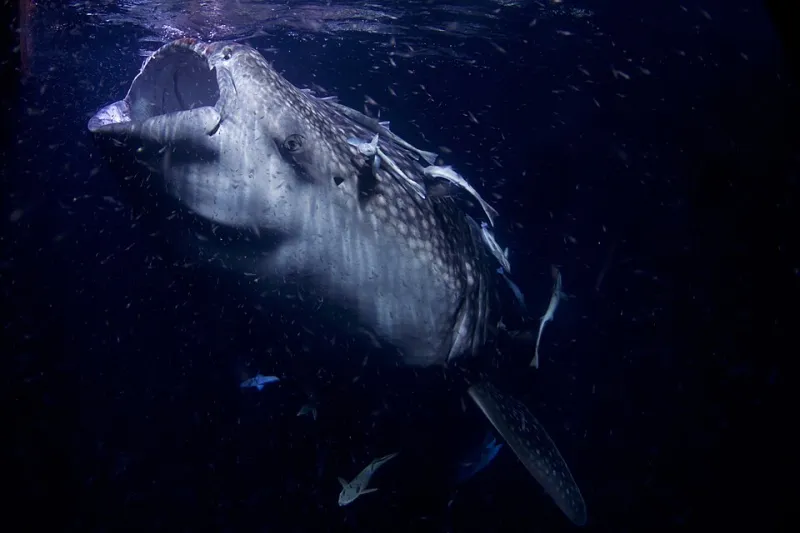
Photo: Arturo de Frias Marques, CC BY-SA 4.0, via Wikimedia Commons
If you've ever slipped beneath the surface of the ocean with a snorkel or a scuba tank, you know it's not the silent world most people picture. There's a low, constant hum. Clicks. Distant rumbles. The ocean has always had a voice — actually, it has thousands of them. But scientists are increasingly alarmed that we're muffling those voices faster than we can even document them.
Welcome to the world of marine bioacoustics, a field that's quietly (no pun intended) reshaping how we understand ocean ecosystems — and what we stand to lose.
The Ocean's Original Playlist
Long before container ships and sonar arrays, the sea was a riot of biological sound. Humpback whales sang elaborate, evolving compositions across entire ocean basins. Snapping shrimp created a near-constant crackling backdrop on coral reefs. Male cod and midshipman fish produced low, resonant calls to attract mates. Dolphins used echolocation clicks so precise they could detect a coin-sized object from 70 feet away.
These sounds weren't just incidental — they were functional. Animals used acoustic cues to find food, choose mates, warn of predators, navigate migration routes, and locate spawning grounds. The ocean's soundscape was, essentially, the internet of the marine world: a vast, layered information network that every creature tapped into.
Researchers now call this concept "acoustic ecology," and its central premise is straightforward but profound: the health of an ecosystem can be measured, at least in part, by the richness and diversity of its sounds.
How We Started Drowning It Out
The industrial revolution didn't just change the surface of the planet. It changed the sound of the ocean.
Shipping traffic is the biggest culprit. There are roughly 90,000 commercial vessels operating globally at any given time, and their propellers generate low-frequency noise that can travel thousands of miles through the water column. According to research published by NOAA, ambient ocean noise in many shipping lanes has increased by as much as 32 decibels over the past 50 years. To put that in perspective, that's not a subtle change — it's the acoustic equivalent of going from a library to a construction site.
Then there's military and commercial sonar, seismic surveying for oil and gas (which uses air guns that fire sound pulses loud enough to be detected across entire ocean basins), and the growing noise from offshore wind development. Each source alone would be concerning. Together, they've created what some researchers describe as a "chronic acoustic smog" that blankets vast stretches of the world's oceans.
Species Caught in the Static
The consequences are showing up across the food web, and they're not pretty.
North Atlantic right whales — already one of the most endangered large mammals on Earth, with fewer than 350 individuals remaining — have been documented shifting the frequency of their calls over recent decades, apparently in an attempt to be heard above shipping noise. That kind of adaptation takes enormous energy and may still not be enough. Studies have shown that right whales in high-traffic areas near the US East Coast show elevated stress hormone levels during periods of intense vessel activity.
Humpback whales off the California coast have been recorded shortening their songs and reducing the complexity of their vocalizations in noisy conditions — changes that could affect mate selection and reproductive success.
But it's not just the charismatic megafauna. Fish are struggling too. Reef fish larvae use the sound of a healthy reef — that crackling, clicking biological chorus — to navigate toward suitable habitat after hatching. When that acoustic beacon is masked by human noise, larvae can drift past viable reefs without settling. Some researchers believe this mechanism may be contributing to slower reef recovery rates in heavily trafficked areas of the Florida Keys and the Gulf of Mexico.
Even invertebrates aren't immune. Studies on cephalopods like squid and cuttlefish have found that exposure to low-frequency noise similar to seismic surveys causes physical damage to their statocysts — the sensory organs they use to detect sound and maintain balance.
Listening More Carefully
The good news, if there is any, is that scientists are getting remarkably good at monitoring these soundscapes. Passive acoustic monitoring devices — essentially underwater microphones left in place for months or years — are being deployed across US coastal waters by institutions including the Scripps Institution of Oceanography and the Woods Hole Oceanographic Institution.
These hydrophones are building a baseline picture of what healthy and degraded acoustic environments look like, which is critical for both research and policy. The data is already informing shipping speed reduction programs in places like the Santa Barbara Channel off Southern California, where voluntary vessel slowdowns have been shown to reduce underwater noise by up to 66 percent while also cutting the risk of whale strikes.
Some conservation groups are pushing for formal "acoustic sanctuaries" — protected zones with strict limits on noise-generating activities — modeled loosely on existing marine protected areas. The National Oceanic and Atmospheric Administration has begun incorporating acoustic habitat considerations into some of its management frameworks, though advocates say the pace of policy change still lags far behind the science.
What You Can Do From the Shore
Here's the thing that often gets lost in these conversations: ocean noise pollution isn't just a problem for researchers and policymakers. It's a problem that connects directly to consumer choices and civic engagement.
Supporting organizations like Oceana and the Natural Resources Defense Council, which have actively litigated against irresponsible sonar use and seismic surveying near sensitive habitats, is one tangible way to push back. Choosing seafood certified by programs that consider vessel practices matters too. And if you're a boater yourself, being mindful of speeds in known whale habitats — especially along the Atlantic coast during right whale season and in Pacific Northwest waters where Southern Resident killer whales hunt — makes a real difference.
The ocean's soundscape is something most of us will never hear directly. But it underpins a web of life that feeds billions of people, regulates our climate, and represents billions of years of evolutionary complexity. Losing it wouldn't just be an ecological tragedy. It would be a profound failure of attention — a world we let go quiet because we never stopped to listen.