One Fish to Rule Them All: How Tearing Out Old Dams Brought the Pacific Northwest Back to Life
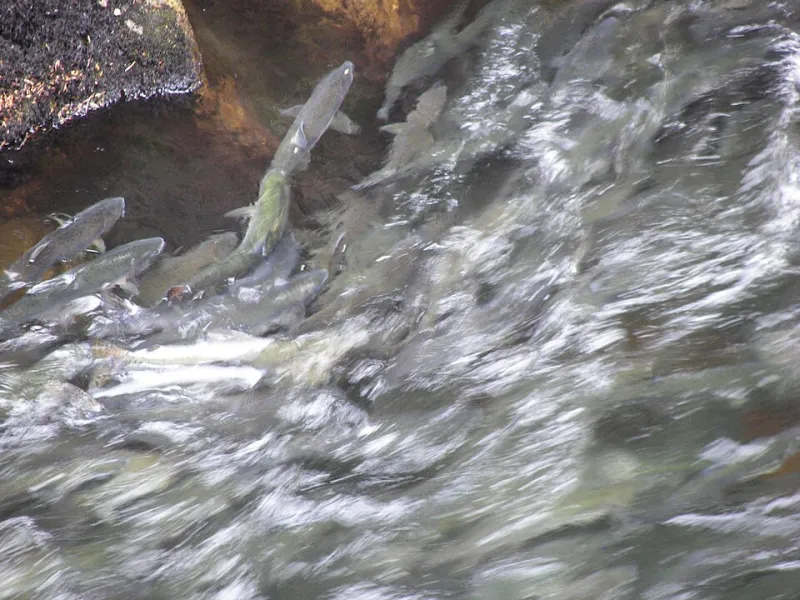
Photo: Wknight94, CC BY-SA 3.0, via Wikimedia Commons
There's a moment that biologists working along Washington's Elwha River still talk about. It was just a few years after the Elwha and Glines Canyon dams came down — the largest dam removal project in American history at the time — and a researcher spotted a grizzly-sized black bear standing knee-deep in the river, pawing at something silver and thrashing. She hadn't seen a bear fishing that stretch of water in over a decade. Nobody had.
The salmon were back. And everything that depended on them was starting to remember.
The Dams That Broke a River's Memory
For most of the twentieth century, the Pacific Northwest's rivers were treated like infrastructure problems waiting to be solved. Hydroelectric dams were the answer — clean power, flood control, irrigation. Nobody was thinking much about the fish.
The Elwha Dam went up in 1913. Within a decade, the river's legendary salmon runs — chinook that could push 100 pounds, coho stacked so thick you could nearly walk across their backs — had essentially collapsed above the barrier. The Lower Elwha Klallam Tribe, whose culture and food sovereignty had been built around those fish for thousands of years, watched their river go quiet.
Similar stories played out up and down the Pacific coast. The Klamath River in northern California. The Snake River system in Idaho. Dam by dam, the salmon's ancient migration routes were severed, and the ecosystems that had evolved around them began to quietly unravel.
The case for removal started building in the 1990s, driven by tribal advocacy, environmental litigation, and the hard math of what those dams were actually costing — economically and ecologically. When the Elwha's two dams finally came down between 2011 and 2014, it was a watershed moment in more ways than one.
What Comes Back First
The recovery didn't happen overnight. Ecosystems don't just snap back like a rubber band. The riverbed above the old dam sites was buried under decades of accumulated sediment — a gray, lifeless sludge that smothered the gravel beds where salmon need to spawn. Early monitoring was cautious, almost hesitant.
But then the sediment started moving. The river, freed to behave like a river again, began sorting itself out. Gravel bars re-formed. Woody debris accumulated. Aquatic insects — the base of the food web — started colonizing newly oxygenated stretches.
And the salmon found it. Within two years of the Elwha dams coming down, chinook were spotted spawning in reaches they hadn't accessed in a century. Steelhead pushed further upstream than anyone expected. The fish, it turned out, had not forgotten. The instinct to return to their birth waters is encoded deep, and they were ready to use it the moment the doors opened.
On the Klamath — where four dams came down starting in 2023 in the biggest dam removal project ever attempted — early results have been similarly striking. Tribal monitors from the Yurok, Karuk, and other nations reported salmon in upper river sections almost immediately. The fish weren't waiting for an official green light.
The Web Comes Alive
Here's what makes salmon genuinely extraordinary from an ecological standpoint: they don't just live in rivers. They connect oceans to mountains.
Salmon spend years feeding in the nutrient-rich Pacific before returning inland to spawn and die. Their bodies carry marine-derived nitrogen — a chemical signature that scientists can actually detect in the rings of riverside trees, in the soil, in the fur of bears. When salmon runs collapse, that nutrient pipeline shuts down, and the entire riparian ecosystem starts running on empty.
When the fish come back, so does the fertilizer.
Bald eagles, which had become a genuine rarity along depleted salmon rivers, are showing up in growing numbers along recovering stretches of the Elwha. Bears are fattening up on salmon protein before hibernation, which correlates directly with better cub survival rates the following spring. River otters have returned to sections where they'd been absent for years.
And then there are the orcas — the Southern Residents, the critically endangered population of killer whales that hunt off the coast of Washington and British Columbia. These whales eat almost exclusively chinook salmon. Their decline has tracked the collapse of chinook runs with painful precision. As Elwha chinook numbers grow, researchers and tribal members watching the Southern Residents are cautiously hopeful that the math might, eventually, start working in the whales' favor.
It's a chain that stretches from a dam demolition site in the Olympic Peninsula all the way out to the open Pacific.
The People Who Never Stopped Watching
It's worth being honest about who saw this coming. Tribal nations along these rivers never accepted the narrative that the salmon were just gone. The Lower Elwha Klallam Tribe fought for dam removal for decades before it happened. The Yurok Tribe on the Klamath has been monitoring fish populations and river health through their own tribal programs for years, generating data that proved essential to making the removal case.
Indigenous ecological knowledge said the fish would come back if the barriers were removed. Western science, to its credit, eventually caught up — and is now documenting the recovery in detail. But the advocacy that made it possible was rooted in a relationship with the land that predated the dams by millennia.
What Happens Next
The Elwha is still in recovery mode. Projections for full salmon run restoration range from optimistic to very long-term — some models suggest it could take decades for populations to reach anything close to their historical abundance. The Klamath removal is so recent that we're really only in the opening chapters of that story.
And there are bigger fights ahead. Advocates are now pushing for dam removal on the lower Snake River in Idaho, which would open up hundreds of miles of critical salmon habitat in one of the most contested water policy battles in the American West. The opposition is fierce — from agricultural interests, barge shipping companies, and some regional utilities. The science, though, is increasingly clear about what removal would mean for Snake River chinook and, by extension, for Southern Resident orcas.
For now, the bears are fishing again on the Elwha. The eagles are back in the cottonwoods. And somewhere off the Washington coast, a pod of killer whales is hunting chinook that swam down from a river that humans had the audacity — and eventually, the wisdom — to set free.
That's the thing about keystone species. Pull one out, and the whole arch collapses. Put it back, and you remember what the structure was always supposed to look like.