Clicks, Calls, and Culture: How AI Is Cracking the Orca Communication Code
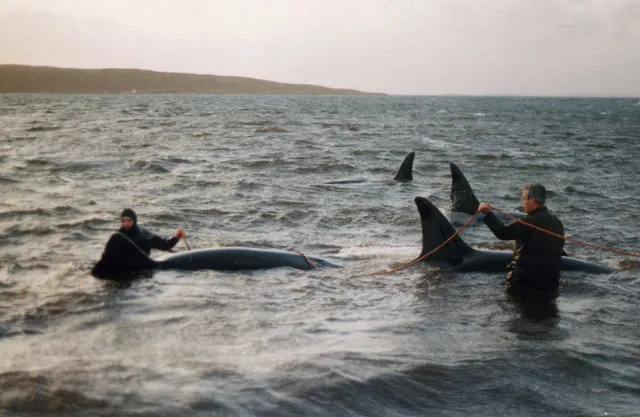
Photo: Mike Pennington, CC BY-SA 2.0, via Wikimedia Commons
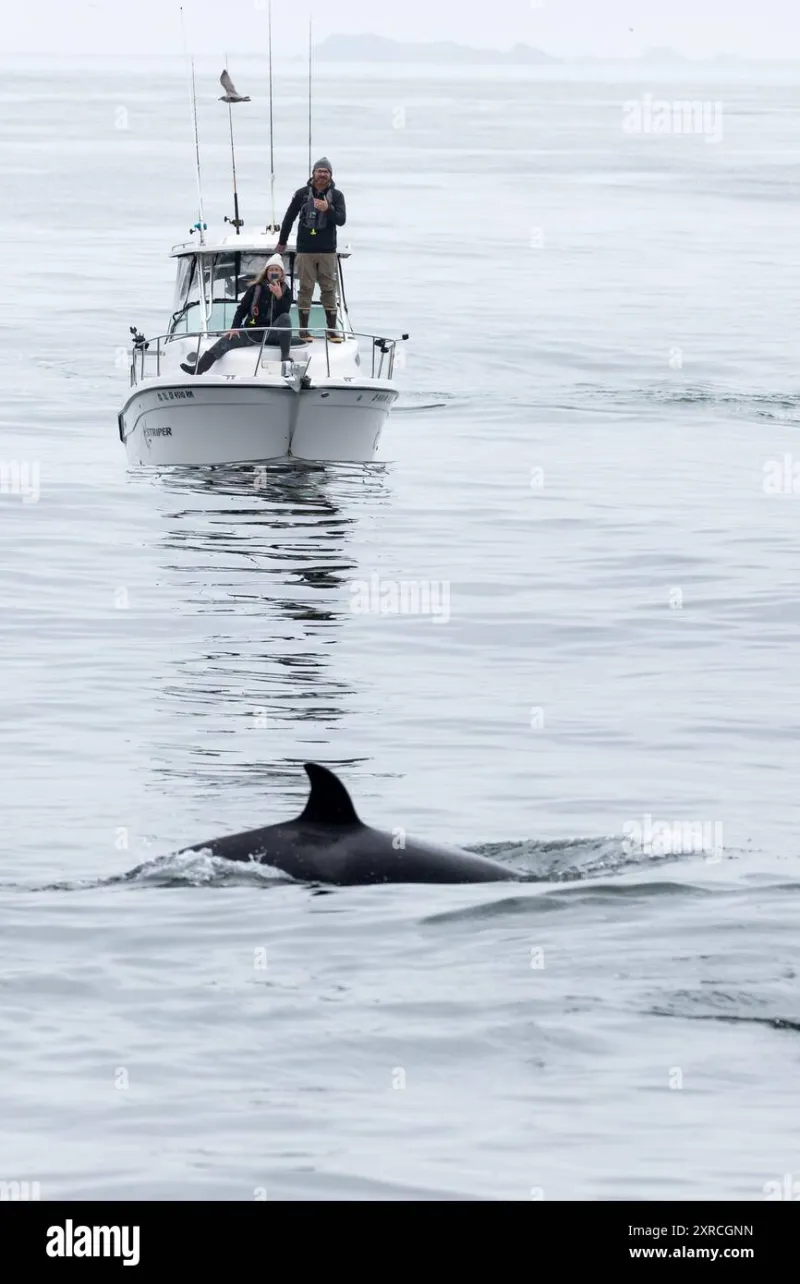
Somewhere off the coast of Washington State, a matriarch surfaces. She exhales, dives, and lets loose a sequence of clicks and whistles that her grandcalf — born just months ago — is already learning to mimic. To a casual observer on a whale-watching boat, it's a beautiful moment. To a bioacoustician with a hydrophone dangling forty feet below the surface, it's a sentence in a language we're only just beginning to read.
For decades, scientists knew orcas were vocal. They knew different pods made different sounds. But the sheer depth of what those sounds mean — the grammar, the regional flavor, the way calls shift depending on whether a family is hunting, socializing, or navigating — that part stayed stubbornly out of reach. Now, a new generation of researchers armed with machine learning tools and massive acoustic databases are starting to change that. And what they're uncovering is genuinely mind-bending.
Not Just Noise — Dialects With Zip Codes
Here's the thing about orca communication that most people don't fully appreciate: it's not universal. An orca from southeast Alaska doesn't "speak" the same way as one from the waters around Monterey Bay. The differences aren't subtle, either. Distinct populations maintain what researchers call vocal dialects — stable, learned patterns of calls that are passed down through generations and vary meaningfully from one group to the next.
Think of it less like different accents and more like different regional languages within the same broader linguistic family. The calls of the Southern Resident killer whales — that critically endangered population that haunts the waters around the San Juan Islands — are distinct enough from their Northern Resident cousins in British Columbia that a trained researcher (or, increasingly, a well-trained algorithm) can tell them apart almost instantly.
What's newer, and considerably more exciting, is the discovery that these dialects are far more structurally complex than anyone previously mapped. Early research catalogued calls in broad strokes — this is a "S1" call, that's a "N4." But modern acoustic analysis is revealing layered variation within those categories: subtle shifts in pitch, rhythm, and sequencing that appear to carry specific meaning depending on context.
Enter the Machines
Processing that level of nuance by human ear alone would take lifetimes. That's where artificial intelligence enters the picture.
Research teams — including groups affiliated with institutions like the University of Washington and nonprofits like Orca Network — have been feeding years of hydrophone recordings into machine learning models trained to detect patterns invisible to human listeners. The results have been startling. Algorithms are now identifying micro-variations in call structure that correlate with specific behaviors: foraging, traveling, socializing, even apparent stress responses when vessels crowd too close.
One particularly compelling line of research is examining what scientists call "greeting ceremonies" — the elaborate, ritualized vocal exchanges that happen when separate orca pods meet after time apart. These aren't random. The calls follow recognizable sequences, almost like a call-and-response protocol, and the specific patterns seem to encode information about identity and relationship. It's the kind of thing that, in any other context, we'd have no hesitation calling a conversation.
Some researchers are now cautiously floating the idea that orcas may possess a form of compositional communication — meaning they can combine known vocal elements in new arrangements to convey novel information. That would put them in extraordinarily rare company. Humans do this. A handful of songbird species show glimmers of it. The evidence for orcas is still preliminary, but it's building.
What the Dialects Tell Us About Culture
The cultural implications of all this are hard to overstate. Orca dialects aren't genetically programmed — they're learned. Calves absorb their family's vocal patterns over years of close contact with mothers, aunts, and grandmothers. When a matriarch dies, her particular vocal knowledge doesn't automatically transfer. Some of it may simply disappear with her.
This means orca pods aren't just biological family units. They're cultural ones. They carry accumulated knowledge — about hunting grounds, migration routes, communication norms — that gets transmitted socially, not genetically. The loss of a single elder whale isn't just a demographic event. It's potentially a cultural one.
For the Southern Residents, already down to fewer than 80 individuals and listed as endangered under the Endangered Species Act, this framing carries urgent weight. Every death in that population isn't just a number ticking down. It's a potential gap in a living library that took generations to compile.
From Alaska to California: A Patchwork of Voices
One of the most compelling ongoing research efforts involves mapping the full acoustic landscape of the West Coast orca populations — essentially building a dialect atlas stretching from the Aleutian Islands down to the Channel Islands off Southern California.
Transient orcas (also called Bigg's killer whales), who hunt marine mammals and range widely along the coast, communicate very differently from the fish-eating residents. Transients tend to be far quieter — a practical adaptation, researchers believe, since their prey (seals, sea lions, porpoises) can hear them. When transients do vocalize, their calls are structurally distinct from resident dialects, and the AI tools are getting remarkably good at flagging which ecotype produced a given recording.
Offshore orcas — a third, less-studied population that ranges far out into the open Pacific — add another layer of complexity. Their dialects remain poorly understood, partly because they're just hard to find and record consistently. But as hydrophone networks expand and autonomous underwater listening buoys become more affordable, the data gaps are slowly closing.
Why This Changes Everything
Decoding orca dialects isn't just an academic exercise. It has direct, practical conservation payoffs.
Understanding when and why orcas go quiet — suppressing their natural communication in the presence of boat traffic or industrial noise — helps researchers quantify the real behavioral cost of acoustic pollution. If a family pod can't effectively coordinate a cooperative salmon hunt because vessel noise is jamming their signals, that's not an abstract harm. It shows up in their bodies, in their stress hormones, in their caloric intake.
Better acoustic monitoring also means better early warning. Detecting a pod's calls before they're visually spotted allows researchers and wildlife managers to implement vessel slowdown zones proactively, rather than reactively. A few knots of speed reduction at the right moment can meaningfully cut underwater noise — and give a hunting family the acoustic space they need to work.
There's also something less quantifiable at stake here. The more we understand about orca communication, the harder it becomes to treat these animals as mere features of the marine environment. They're not scenery. They're neighbors — ones with their own histories, their own vocabularies, their own ways of knowing the ocean that we're only beginning to comprehend.
Listening as a Form of Respect
Out on the water near Point Reyes, or in the cold chop of Puget Sound, or drifting somewhere in the rich upwellings off Kodiak — wherever orcas are talking to each other right now — something genuinely extraordinary is happening. Families are coordinating. Elders are teaching. Calves are practicing sounds they'll use for the rest of their lives.
For most of human history, we've treated that conversation as background noise. Now, finally, we're starting to listen. The least we can do is make sure there's still something left to hear.