Off the Grid and On the Water: How Rogue Citizen Scientists Are Outpacing the Government to Protect Pacific Orcas
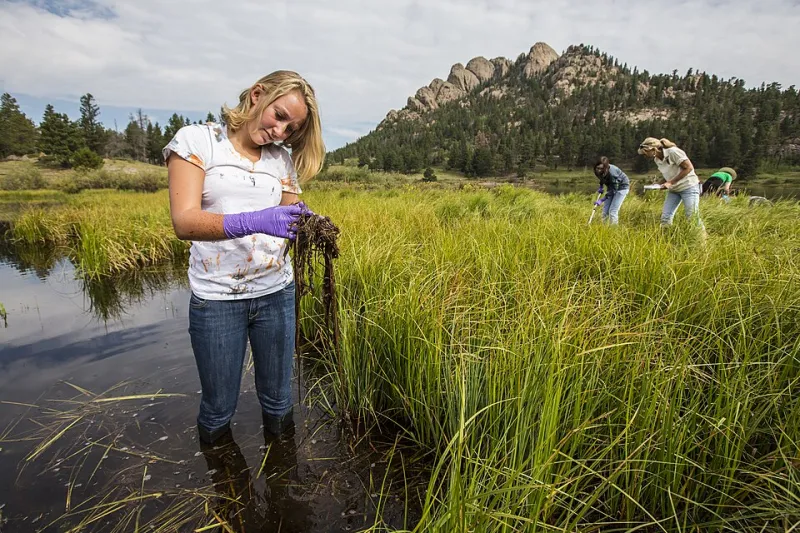
Photo: NPS Photo, Public domain, via Wikimedia Commons
On a gray Tuesday morning in the San Juan Islands, Mara Kelso is already on the water before most people have finished their first cup of coffee. Her 19-foot aluminum skiff smells like salt and neoprene, and her camera rig — a modified telephoto lens mounted to a custom stabilizer arm — looks like something cobbled together in a very serious garage. Which it was. She's been photographing Southern Resident killer whales for eleven years, and she's never received a single dollar of institutional funding.
"I just couldn't wait around for someone else to care," she says, scanning the glassy surface of Haro Strait. "These animals don't have time for bureaucratic timelines."
Mara isn't alone. Across the Pacific Northwest, a loose but surprisingly coordinated network of citizen scientists — photographers, data hobbyists, retired biologists, kayak guides, and passionate amateurs — has quietly built an infrastructure for monitoring orca populations that rivals, and in some cases outpaces, what government agencies can deliver in real time. They share data through encrypted messaging apps, maintain their own photo-ID catalogs, and sometimes clash openly with official conservation bodies over what the data actually means.
This is the underground ecosystem of orca protection. And it's more consequential than most people realize.
Who's Actually Watching the Water
The Southern Resident killer whales — the three family pods known as J, K, and L — are the most critically endangered orca population in the United States. With fewer than 75 individuals remaining, every birth, death, and behavioral shift matters. The National Oceanic and Atmospheric Administration (NOAA) leads official monitoring efforts, but federal resources are finite, field seasons are short, and the whales don't exactly follow government schedules.
That's where people like Mara step in. Her photo-ID database now contains over 40,000 individually cataloged images, cross-referenced by dorsal fin shape, saddle patch pigmentation, and behavioral context. She shares that data — voluntarily and enthusiastically — with NOAA researchers. But she also shares it with a Signal group of roughly 60 other independent observers spread from Puget Sound to the northern tip of Vancouver Island.
"We call ourselves the Strait Watch Collective, though that's not really an official name," says Darnell Okafor, a former Coast Guard officer turned wildlife photographer based in Bellingham, Washington. "It's more like a very dedicated group chat that occasionally changes the course of conservation policy."
He's not exaggerating. In 2022, members of the collective documented a previously unreported behavioral pattern in L pod — repeated surface-active socializing in a section of the Salish Sea that had been flagged for increased vessel traffic. Their compiled footage, submitted informally to NOAA and amplified through social media, contributed to a temporary voluntary vessel restriction in that corridor. Official channels confirmed the pattern months later.
The Tools of the Trade
What makes this network genuinely powerful isn't just passion — it's technology. Consumer-grade drones equipped with thermal sensors can now track surfacing patterns across wide stretches of open water. Hydrophone kits, once the exclusive domain of research institutions, have dropped in price to the point where a dedicated hobbyist can deploy a passive acoustic monitoring station for under $800. AI-assisted photo-ID apps, some built by volunteers within the collective itself, can match dorsal fin profiles against existing catalogs in minutes.
Rachel Tsu, a software developer in Seattle who spends her weekends on the water near Point No Point, built one such app in her spare time. "I basically wanted to solve my own problem," she laughs. "I'd come home with 600 photos and spend three hours trying to figure out which whale was which. Now the app does it in about 45 seconds."
Her tool has since been adopted informally by at least a dozen other observers in the collective, and she's been approached by two academic research groups interested in licensing the underlying algorithm. She hasn't decided what to do with that yet. "Part of me wants to keep it open-source and free forever," she says. "These whales belong to everyone."
Where the Tension Lives
Not everyone is enthusiastic about the rise of independent monitoring. Some professional marine biologists worry about data quality control, observational bias, and the risk of well-meaning amateurs disturbing the animals they're trying to protect. Federal regulations around approaching marine mammals exist for good reasons, and the line between responsible observation and harmful harassment can be frustratingly thin.
"We take those concerns seriously," says Darnell. "We train new members. We have protocols. But I also think some of the resistance is institutional. It's uncomfortable when people outside the system start producing data that challenges official conclusions."
That discomfort has occasionally boiled over. Last year, members of the collective publicly disputed NOAA's assessment of prey availability in the southern Salish Sea, arguing that their own hydrophone data and surface observation logs suggested Chinook salmon presence in key feeding areas had been underreported. The debate played out partly on social media and partly in public comment periods for a revised recovery plan. NOAA ultimately acknowledged the discrepancy and committed to additional survey work in those areas.
"We're not trying to embarrass anyone," Mara says. "We're trying to save whales. If our data helps, great. If it creates a conversation that leads to better science, even better."
What Comes Next
The collective is growing. New observers are joining from Oregon, Northern California, and British Columbia, expanding the geographic footprint of the monitoring network. There are informal talks about formalizing some structure — maybe a nonprofit, maybe a data-sharing agreement with a university partner — though many members are wary of anything that might compromise their independence or slow down their response time.
Mara, for her part, is focused on the water in front of her. She spots a blow about half a mile out — low, bushy, unmistakably orca — and reaches for her camera without a word. The skiff engine hums to life.
"I'll log it, photograph it, and share it with the group within the hour," she says. "And if it's someone we haven't seen in a while, people are going to want to know."
Out here, in the cold gray chop of Haro Strait, the work is relentless and unglamorous and occasionally breathtaking. There are no grants, no press releases, no institutional backing. Just people who decided that waiting for permission was a luxury these whales couldn't afford.
Sometimes the most important conservation work doesn't happen in a lab or a government office. Sometimes it happens in a 19-foot aluminum skiff before sunrise, with a camera and a Signal notification and a whole lot of love for animals that have no idea anyone is watching out for them.
But someone is. And that matters more than any of us might think.