Reading the River Like a Book: The Ancient Field Skills Keeping Pacific Salmon Alive
There's a moment in late summer when the elderberries ripen along certain creek banks in the Pacific Northwest. To most hikers, it's just a pretty detail — ripe fruit, maybe a bear track nearby. To a Yurok fisheries technician, it's a signal. It means the Chinook are moving. It means the river is about to change. And it means it's time to start counting.
This is what traditional ecological knowledge actually looks like in practice. Not a museum exhibit. Not a policy document. A person standing at a riverbank, reading the landscape the way the rest of us read a weather app — except with a few thousand years of peer review behind it.
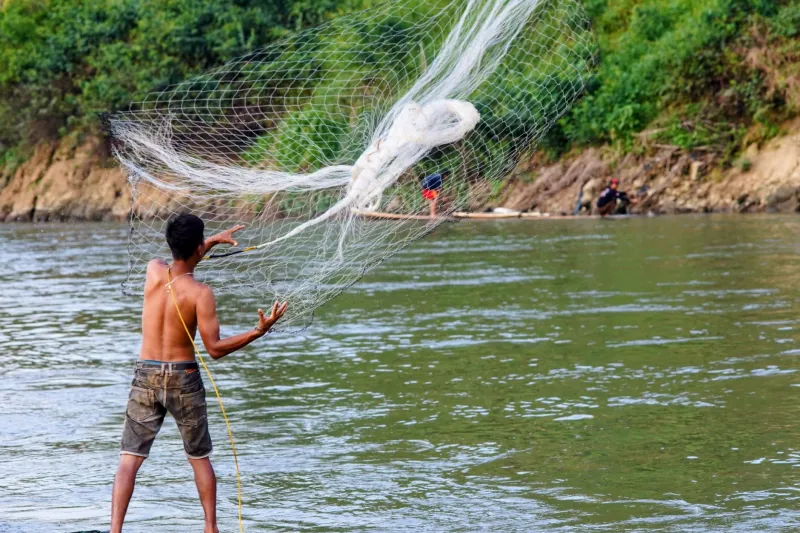
Across the Pacific Northwest, from Northern California's Klamath Basin up through the Columbia Plateau and into the river systems of British Columbia, Indigenous nations are doing something that no federal agency has quite managed to pull off: keeping salmon runs alive through a combination of deeply observed environmental knowledge, seasonal timing systems, and relationship-based land stewardship that treats rivers as living entities rather than resources to be extracted.
The Calendar the River Keeps
Western fisheries management runs on calendars too — stock assessments, escapement goals, commercial season windows. But those calendars are relatively young, and they're built on data sets that, in the grand scheme of Pacific salmon history, barely register as a blip.
Indigenous seasonal calendars are different. They're not tied to fixed dates. They're tied to the land.
For the Nez Perce, whose ancestral territory spans what is now Idaho, Oregon, and Washington, salmon management has always been organized around a web of ecological cues — the blooming of specific plants, the behavior of certain birds, snowpack conditions in the high country, water temperature patterns that correlate with insect hatches and, by extension, with fish feeding behavior and migration timing. These aren't approximations. They're the result of generations of careful observation, passed down through oral tradition, ceremony, and hands-on mentorship.
Yurok tribal monitors on the Klamath River use similar layered observation. They're watching water clarity, tracking the presence of lamprey — a species that often precedes salmon runs — and noting subtle shifts in riparian vegetation that signal changes in water table levels. These indicators don't appear in any federal monitoring protocol. But they work.
What the Elders Are Teaching the Scientists
In recent years, something genuinely interesting has started happening at the intersection of Western fisheries biology and Indigenous ecological knowledge. Scientists are showing up — not to explain things, but to listen.
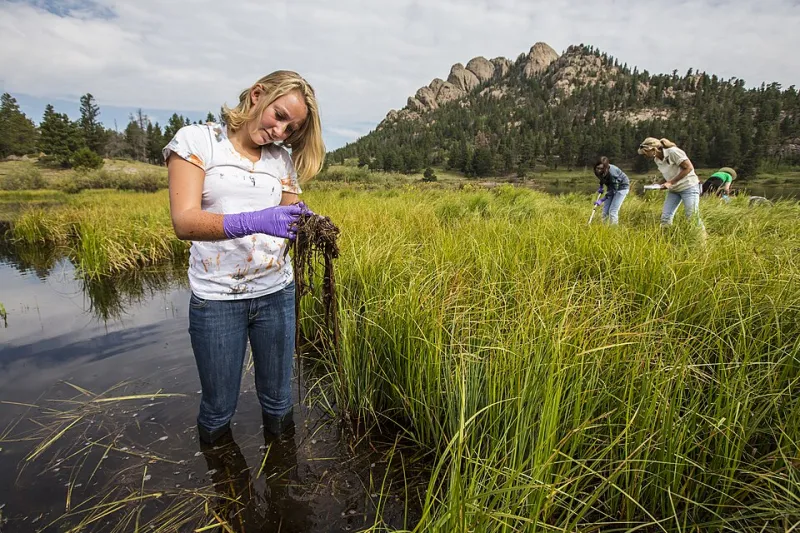
Researchers from universities and state agencies across the region have begun formal collaborative projects with tribal nations, and what they're finding is humbling. Traditional knowledge holders have been describing fish behavior, habitat use, and population dynamics that align closely with what genetic sampling and acoustic tagging studies are only now confirming.
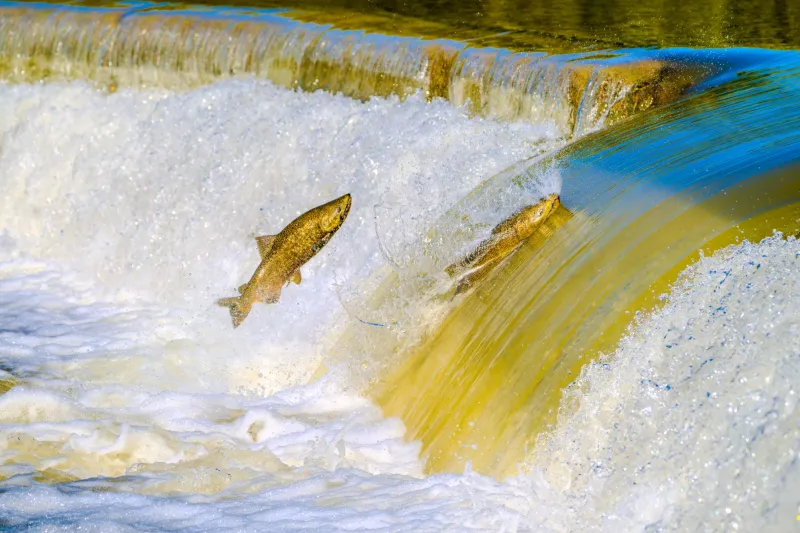
One striking example comes from work done in collaboration with the Confederated Tribes of the Umatilla Indian Reservation. Tribal elders had long described specific gravel bars and cold-water upwelling zones as critical resting habitat for migrating Chinook — places where fish would hold during periods of thermal stress. For years, that knowledge existed largely outside the formal management conversation. When researchers began deploying temperature loggers and tracking tagged fish, they found exactly what the elders had described: thermal refugia that fish were using in predictable patterns, in the exact locations that had been identified through generations of observation.
The data confirmed the knowledge. The knowledge had been there all along.
Counting Fish the Old Way — and Why It Still Matters
Modern salmon counting relies on sonar stations, video weirs, and mark-recapture studies. These tools are genuinely useful. They're also expensive, equipment-dependent, and sometimes wrong in ways that aren't immediately obvious.
Tribal fish counters bring a different kind of precision. Standing in or near the water, watching fish hold and move in real time, experienced observers can assess run composition — the ratio of adults to jacks, the body condition of fish, the presence of disease signs — in ways that remote sensing simply can't replicate. The Skokomish Tribe on Hood Canal has long maintained fish monitoring programs that combine traditional observation methods with contemporary data collection, creating records that are both scientifically rigorous and grounded in place-based knowledge.
There's also something to be said for the consistency of the observer. When the same families have been watching the same river for generations, they notice things that rotate agency staff simply can't. Subtle changes in run timing. Shifts in where fish are holding. The gradual disappearance of certain size classes. These are the early warning signals that, if caught soon enough, can prompt management changes before a population crashes.
Ceremony as Conservation Practice
It would be easy — and wrong — to separate the ceremonial dimensions of Indigenous salmon stewardship from the practical ones. First Salmon ceremonies, practiced by dozens of Pacific Northwest tribes, aren't just cultural observances. They're embedded with protocols that functionally limit harvest pressure at critical moments in the run, ensure that fish are handled respectfully (which has real biological implications for catch-and-release survival rates), and reinforce community-wide attention to river health.
The Karuk Tribe in Northern California has articulated this clearly in their own resource management frameworks: ceremony and ecology aren't separate systems. The obligation to perform certain ceremonies correctly creates an obligation to maintain the habitat conditions those ceremonies require. You can't have a First Salmon ceremony without salmon. That's not a metaphor — it's a management incentive structure that has persisted for millennia.
The Gap Between Respect and Integration
None of this means the relationship between tribal nations and state or federal fisheries agencies is without friction. It absolutely isn't. Tribes have had to fight — legally, politically, and sometimes physically — for the right to manage their own fisheries and have their knowledge taken seriously. The Boldt Decision of 1974, which affirmed tribal treaty fishing rights in Washington State, was a landmark. But affirming rights in court and genuinely integrating Indigenous knowledge into day-to-day management decisions are very different things, and the gap between them remains wide.
Progress is real, though. The Pacific Salmon Commission's bilateral work between the US and Canada increasingly incorporates tribal and First Nations input. Oregon's Coastal Coho Recovery efforts have brought tribal ecological knowledge into habitat prioritization decisions. And on the Klamath, the largest dam removal project in US history — completed in 2024 — was shaped in significant part by the priorities and knowledge of the Yurok, Karuk, and other river tribes.
What the River Already Holds
Stand at the edge of any healthy salmon stream in the Pacific Northwest and you're standing at the edge of something ancient and relational. The fish are connected to the trees, the trees to the bears, the bears to the soil, the soil to the next generation of fish. Indigenous communities have understood and stewarded that web for longer than Western science has existed.
The question now isn't whether traditional ecological knowledge is valid. Study after study has settled that. The question is whether we — as a society, as a management culture, as people who claim to care about wild salmon — are willing to actually learn from it. Not extract it. Not archive it. Learn from it, on the terms of the people who hold it.
The elderberries are ripening. The fish are moving. Someone already knows what to do next.