When the Killer Whales Came Back, the Whole Ocean Exhaled

Photo by Photo by Vidar Nordli-Mathisen on Unsplash on Unsplash
For decades, the waters off the Pacific Northwest coast carried a particular kind of silence. Not the peaceful kind — the hollow kind. The kind that comes when something essential has been removed and the rest of the system quietly rearranges itself around the absence.
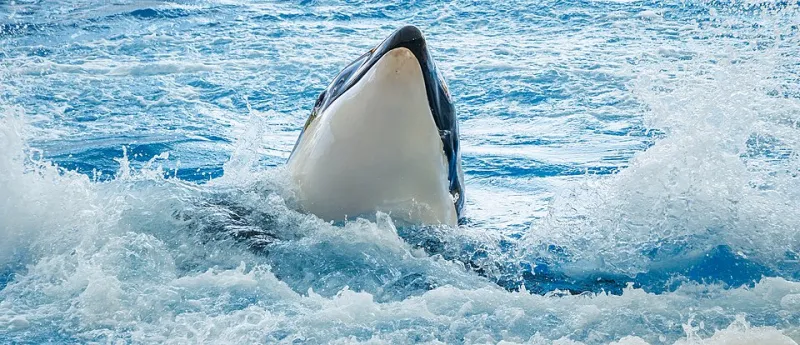
Then, slowly, the orcas started coming back.
What happened next is the kind of story that makes marine ecologists reach for superlatives they'd normally never use in a peer-reviewed paper. The return of killer whales to ecosystems that had functionally lost them isn't just a conservation win. It's turning out to be a masterclass in how deeply a single species can be woven into the fabric of an ocean — and what unravels when you pull that thread.
The Fear That Moves Mountains (and Salmon)
Here's something that doesn't show up in most wildlife documentaries: prey animals don't just react to predators when they're being chased. They react to the idea of them.
Dr. Lena Hartfield, a marine ecologist with the Pacific Coastal Research Consortium in Washington State, has spent the last several years tracking behavioral shifts in Chinook salmon populations as orca sightings in certain corridors have increased. What she's finding is striking. "The salmon aren't just being eaten more," she told us over a call from her office in Bellingham. "They're moving differently. They're using different depths, different timing. The presence of orcas — even the acoustic signature of them — is changing how salmon relate to the entire water column."
This is what ecologists call the "landscape of fear," and it has enormous downstream consequences. When prey species alter their movement patterns, they graze differently, distribute nutrients differently, and interact with other species in new ways. A salmon that avoids a particular feeding ground because it smells like orca isn't just a scared fish — it's a missing link in a chain that runs from the open ocean all the way to the forest floor.
From Apex to Algae: The Long Chain of Consequence
If you want to understand why the return of orcas matters beyond the obvious charisma of the animals themselves, follow the nutrients.
Whales — including orcas — are what marine scientists sometimes call "ecosystem engineers" in the nutrient cycling sense. Their waste products are extraordinarily rich in iron and nitrogen, fertilizing phytoplankton blooms that form the base of the entire marine food web. Larger whale populations mean more of this biological pumping action, which feeds everything from tiny copepods to the rockfish that Pacific Coast fishermen depend on.
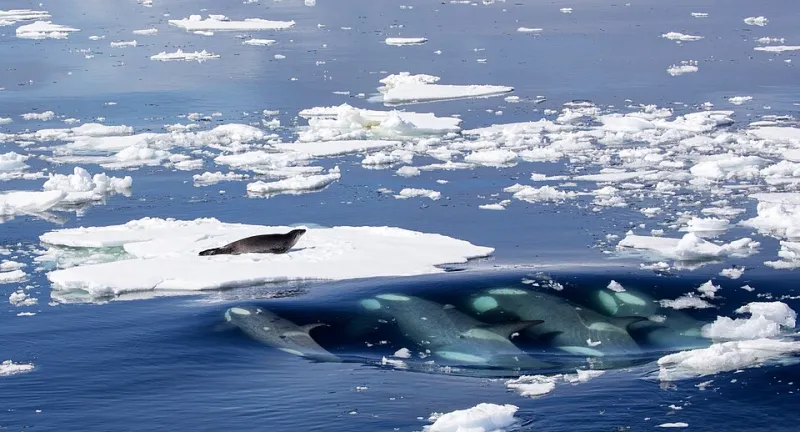
But the orca effect goes further than direct nutrient contribution. By regulating the populations of marine mammals like harbor seals and sea lions — which are primary prey for transient orcas — killer whales indirectly influence which fish those mammals consume and in what quantities. Remove the orca, and seal populations can balloon, putting enormous pressure on already-stressed salmon runs. Restore the orca, and you restore a check on that pressure.
"It's not a simple predator-prey equation," says Dr. Marcus Tully, who studies trophic cascades at Oregon State University's Marine Mammal Institute. "You're talking about a regulatory influence that touches four or five trophic levels simultaneously. The orca isn't just eating — it's governing."
The Chemistry Nobody Was Watching
One of the more unexpected findings emerging from this research involves ocean chemistry itself — specifically, how predator recovery is beginning to show up in water quality data.
Researchers working in the Salish Sea have been cross-referencing long-term orca presence data with phytoplankton bloom records and dissolved oxygen measurements. The preliminary picture is intriguing: areas with more consistent orca activity show subtle but measurable differences in nutrient cycling patterns compared to adjacent zones with fewer apex predators.
None of this is definitive yet — the datasets are still relatively short and the variables are genuinely complex — but the directional signal is consistent enough that several research teams are now building longer-term monitoring programs specifically designed to test the hypothesis. "We're at the early stages of understanding something that could be really significant," Dr. Hartfield says carefully. "The ocean doesn't operate in isolated compartments. Change the top, and you change everything."
The Ecosystem That Forgot Its Rules
There's a concept in conservation biology called "ecological amnesia" — the idea that ecosystems can lose their functional memory of what they're supposed to look like when key species are absent for long enough. Prey animals born into a world without their primary predator don't learn the appropriate fear responses. Vegetation patterns shift to reflect the grazing habits of ungoverned herbivore populations. The system develops a new, impoverished equilibrium and forgets the old one.
Restoring apex predators to ecosystems in this condition isn't a simple matter of releasing animals and stepping back. The ecosystem has to relearn itself — and that process is neither fast nor linear.
In the Pacific Northwest, researchers are watching this relearning happen in real time. Some of it looks like recovery. Kelp forests in certain areas are showing signs of increased density, potentially linked to sea urchin population regulation by predators further up the chain. Seal behavior in parts of Puget Sound has shifted noticeably in areas where orca activity has increased. Salmon migration corridors that had been degraded are showing early signs of biological complexity returning.
But some of it looks like chaos — at least temporarily. "Ecosystem recovery is messy," Dr. Tully notes. "You don't just flip a switch and get a pristine ocean. You get years of adjustment, competition, sometimes local disruption, before things settle into a healthier configuration. People need to be patient with that process."
What We're Still Getting Wrong
For all the excitement around these findings, researchers are quick to pump the brakes on triumphalism. Southern Resident killer whales — the iconic, salmon-eating population that calls the Pacific Northwest home — remain critically endangered. Their numbers hover around 70 individuals. The prey-behavior effects and nutrient cycling shifts that scientists are tracking are largely associated with transient orca populations, which have fared somewhat better.
And the threats haven't gone away. Vessel noise continues to disrupt orca communication and hunting. Contaminant loads in the food chain remain dangerously high. Chinook salmon — the dietary foundation of the Southern Residents — are still fighting their way back from generations of dam blockages and habitat loss.
"We're seeing early signals of what's possible," says Dr. Hartfield. "But we're nowhere near a recovery story. We're at the beginning of understanding what a recovery story could look like, if we make the right choices."
Those choices — about dam removal, about shipping lane management, about pollution regulation — are political as much as they are ecological. The science is pointing in a clear direction. Whether the policy follows is a different question entirely.
The Ocean Is Listening
There's something almost philosophical about what apex predator research is revealing. The ocean isn't a passive backdrop for the creatures that live in it — it's a dynamic system that actively responds to who's present and who isn't. Orcas aren't just living in the Pacific Northwest ecosystem. In a very real sense, they're making it.
Every click of echolocation, every cooperative hunt, every nutrient-rich plume drifting up from depth — it all feeds back into a system that evolved over millions of years with killer whales as one of its central organizing forces.
When we lost them, the ocean didn't stay the same. It adapted, in the way that damaged things adapt: by becoming less than it was.
Now, tentatively, haltingly, it's beginning to remember what it used to know. And the scientists watching it happen are doing their best to keep up.